Tag Archives: Writing

You QUACK me UP! Math and Literacy Centers.

The Fourth Quarter Classroom – HELP is Here!

AKA… What to use to keep some working, while reteaching to others! 🙂

SUMMER is finally around the corner!

Assessments, report cards, cleaning, paperwork, etc…

Third quarter done! YIPPEE!!

Though I really DO love this time of the year.

Kiddos are making TREMENDOUS progress!

Sniff…sniff…PROUD TEACHER!

So NOW we WORK!

Now we have the 4th Quarter DASH

            Almost SUMMER!

Catch everyone up to grade-level standards

before they go to second grade!

And to HELP…I need it!

Some of my kiddos will work on YOU QUACK ME UP!


While I am WORKING with small groups, reteaching concepts they DIDN’T quite get.

DATA tells me that.

Right?

Say this with a SMILE…

“YOU QUACK ME UP!” 

to be taken to my TPT store!

You Quack Me up
You Quack Me Up! 


ELA & MATH Centers for first grade 4th quarter!

You Quack Me Up ELA & Math for First grade table of contents

ELA: rhymes, Read the Room, Sight Word Games,Grammar

MATH:  3 digit addition, Place Value, Guess My Number

You Quack Me Up ELA & Math for First grade rhyme game

You Quack Me Up ELA & Math for First grade word work

You Quack Me Up ELA & Math for First grade story vocabulary

You Quack Me Up ELA & Math for First grade prefixes

You Quack Me Up ELA & Math for First grade task cards

You Quack Me Up ELA & Math for First grade Sight Word Game

You Quack Me Up ELA & Math for First grade 3 digit addition

You Quack Me Up ELA & Math for First grade Place Value

You Quack Me Up ELA & Math for First grade number game

My kiddos LOVE LOVE LOVE this!

So much fun going on in Room 3!

Ready for Summer?

More? 

Here you go…

And NOW for the almost SUMMER FREEBIE!

Click HERE

FREEBIE HFW GAME

This GMA wants some

GIGGLE  TIME! 

baby laughing

cowgirl sisters

smiling boy in John Deere Tshirt

little girl princess

 And so…

HERE  WE  GO! 🙂

Happy Summer and let the Fun begin!

Check out 1stgradefireworks 

for MORE goodies!

Have a great Summer and Check back
for new Back to School Goodies! 

                                                                 Wendy


Rethinking Literacy in 2023

We get a “Literacy” DO-OVER : Shared Writing Updated for 2023

And a FREE BALANCED LITERACY Resource to get you started!

2023 is the Year of LITERACY!

Because 2022 was so BAD….we get  DO-OVER!

We get a “LITERACY ” do-Over”!

Rethinking Literacy in 2023

Rethinking Literacy in 2023

Keep Reading to the bottom for a 

FUN FREEBIE

Free for Followers

Freebie for Followers

Ready to UPDATE your literacy block? 

Balanced Literacy: Here is your NEW YEAR’s PLAN!

*DISCLAIMER…  I know the Science of Reading is the NEW “go-to” for teaching Reading.

I AM NOT AN EXPERT! I am learning. I have been teaching reading to FIRST GRADERS for 30+ Years. AND I AM ALWAYS  LEARNING. SO… I hope YOU are open to new ideas & “reusing” OLD ideas to help our “littles” learn. If this helps YOU – Yeah! ( Jan. 2022). 

Why? What? and How?

The elementary classroom Balanced literacy model has been defined as  “an approach designed to help individual students learn how to process a variety of increasingly challenging texts with understanding and fluency.” (Fountas & Pinnell, 2001)

As a result,  It is HOW we teach our students to be independent readers and writers. It is NOT what books we use to teach them.

Balanced Literacy has been defined in “components” or  “pieces” of literacy instruction.

This 8-week series will focus on the components of a complete BALANCED LITERACY program. We will focus on clear and concise definitions. Definitions that educators can discuss in collaboration.

A “common language” where we can learn from each other and with each other.

The 8 components we will focus on are:

  1. Read Alouds
  2. Shared Reading
  3. Guided Reading
  4. Independent Reading
  5. Modeled / Interactive Writing
  6. Shared Writing
  7. Guided Writing / Writer’s Workshop
  8. Word Work

Each week we will focus on one area of Balanced Literacy and share experiences,  teacher tips, and resources to support and expand our Balanced Literacy repertoire.

BALANCED LITERACY

This week:   Shared  Writing.

Week 1:  We discussed Read Alouds.

Week 2: We discussed   Shared Reading.

Week 3:  We discussed Guided Reading.

Week 4: We discussed Independent Reading.

Week 5: We discussed Interactive Writing.

This week we jump into  SHARED  WRITING.

Let’s talk about Shared Writing.

Before we write, we read, discuss, preview new vocabulary, and make connections about our thoughts and ideas.

Shared writing is an instructional approach to teach writing to students by writing with them. The idea is to teach writing through writing. The process of writing is demonstrated by the teacher through a ‘write aloud’ process. The teacher acts as a scribe while the students contribute ideas.

Effective literacy teachers present the demonstration, explanation, and models needed by naïve writers in order for them to understand how and why to incorporate genre and text structures (and such transcription skills as punctuation and spelling) into their own writing behavior.  ReadWriteThink.org

First, we will discuss Shared Writing.  The teacher transcribes the entire text while engaging students in a rich discussion about how the text should be composed.

  • Shared writing is taught to small groups or a whole class in briskly paced, 5- to 20-minute lessons.
  • Plan lessons for types of writing that present particular challenges to your students.
  • First, develop and extend children’s background and language knowledge on a topic or experience of interest.
  • Establish a purpose for the writing and an intellectually engaging opportunity for students to apply new learning.
  • Write the entire text yourself in front of students (using chart paper or document viewer) while requesting input from students regarding aspects of the writing where they most need to expand their expertise.

Stop for a moment and VISUALIZE what you have read.

  • During the writing, model processes needed by your students. Have a small whiteboard available, for example, to demonstrate to students how to say a word slowly and write sounds heard into “sound boxes” (Clay, 2006) before writing a phonetically regular word into the text for them.
  • Demonstrate in-the-moment revision during shared writing as necessary to construct a strong draft. Reread the text to students from time to time to discuss what needs to be written next or to monitor whether or not the text conveys information clearly.
  • Do not deliberately make errors during shared writing. Model the immediate construction of a high-quality draft.
  • Read the completed text to students.
  • Post the text in an accessible spot in the classroom, and provide opportunities for students to read or use the text multiple times over the next several days or weeks.

ReadWriteThink.org

Some tips to keep in mind for shared writing:

  • I use large paper that looks just like the paper the children use during writing workshop. I write on chart paper or perhaps a SmartBoard so the whole group can easily read it.
  • The children are engaged and involved in telling the story (or essay, song, poem, or other kinds of text).
  • I restate/scaffold children’s language by modeling rich language and coach them when they are the storyteller.
  • Over time, children see each step of the writing process modeled:
    • Coming up with ideas
    • Planning across the pages, rehearsing how the text will go
    • Drafting words and sentences
    • Revising
    • Editing
    • Publishing
  • Over time, children see qualities of good writing modeled:
    • Meaning
    • Organization/Structure
    • Genre
    • Detail
    • Voice
    • Conventions
  • TwoWritingTeachers
Shared Writing

How to Take Care of a Goldfish. The Daily Cupcake

The Daily Cupcake

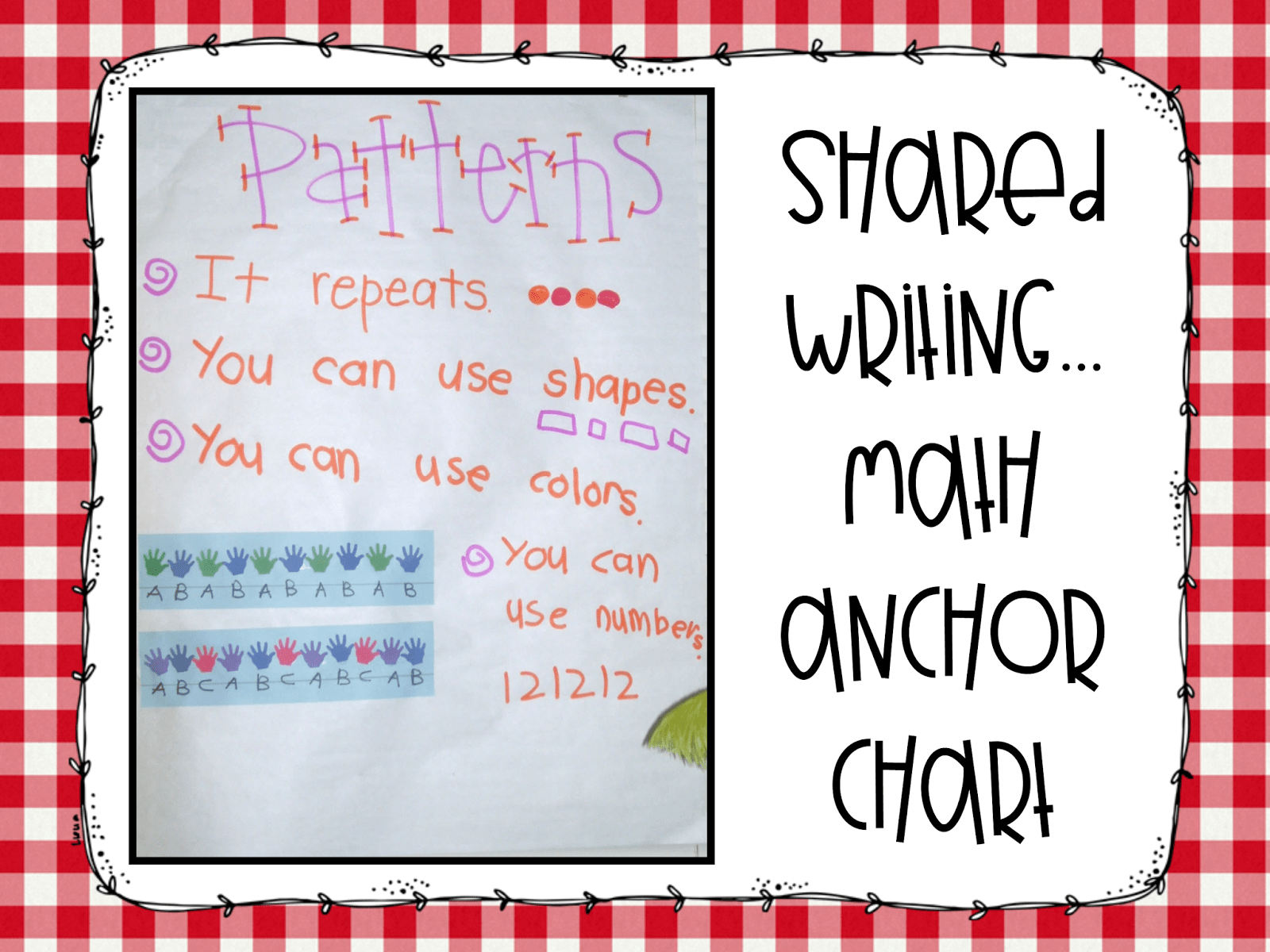
Shared Writing

Shared Writing – MAth Anchor Chart – Kindergals

Kindergals

Tools that may be helpful for shared writing:


Mr. Sketch Smelly Markers

Mr. Sketch smelly markers

Teacher Books that may help with Shared Writing:


These literacy posts may help in YOUR Balanced Literacy journey.

Balanced Literacy

Read At Home

Flexible Seating

Read Alouds

Reading at Home

So…Leave me a comment… What does  Shared Writing look like in YOUR classroom?

FUN FREEBIE


Free for Followers

Freebie for Followers

Signature

Signature


Rethinking Literacy in 2023

We get a “Literacy” DO-OVER : Guided Writing / Writer’s Workshop

And a FREE BALANCED LITERACY Resource to get you started!

2023 is the Year of LITERACY!

Because 2022 was so BAD….we get  DO-OVER!

We get a “LITERACY ” do-Over”!

Rethinking Literacy in 2023

Rethinking Literacy in 2023

Read to the bottom

for a FUN FREEBIE

Free for Followers

Freebie for Followers

Ready to UPDATE your literacy block? 

Balanced Literacy: Here is your NEW YEAR’s PLAN!

*DISCLAIMER…  I know the Science of Reading is the NEW “go-to” for teaching Reading.

I AM NOT AN EXPERT! I am learning. I have been teaching reading to FIRST GRADERS for 30+ Years. AND I AM ALWAYS  LEARNING. SO… I hope YOU are open to new ideas & “reusing” OLD ideas to help our “littles” learn. If this helps YOU – Yeah! ( Jan. 2022). 

The Why? The What? and The How?

This Week:  Writer’s Workshop

Balanced literacy has been defined as  “an approach designed to help individual students learn how to process a variety of increasingly challenging texts with understanding and fluency.” (Fountas & Pinnell, 2001)

It is an approach to teaching. NOT a curriculum. It is HOW we teach our students to be independent readers and writers. It is NOT what books we use to teach them.

Balanced Literacy has been defined in “components” or  “pieces” of literacy instruction.

This series will focus on the components of a complete BALANCED LITERACY program. We will focus on clear and concise definitions. Definitions that educators can discuss in collaborations. A “common language” where we can learn from each other and with each other.

The 8 components we will focus on are:

  1. Read Alouds
  2. Shared Reading
  3. Guided Reading
  4. Independent Reading
  5. Modeled / Interactive Writing
  6. Shared Writing
  7. Guided Writing / Writer’s Workshop
  8. Word Work

Each week we will focus on one area of Balanced Literacy and share experiences,  teacher tips, and resources to support and expand our Balanced Literacy repertoire.

BALANCED LITERACY

This week:   Guided Writing / Writer’s Workshop

This week we jump into Writer’s Workshop!

You can’t THINK of Writing without thinking …

LUCY  CALKINS and others.

During the writing workshop, students are invited to live, work and learn as writers. They observe their lives and the world around them while collecting, drafting, revising, editing, and publishing well-crafted narrative and expository texts. Students receive direct instruction in a minilesson, during which the teacher explicitly names a skill proficient writers use that is within reach for most of the class, then demonstrates the skill and provides students with a brief interval of guided practice using it. Students then have time to write, applying the repertoire of skills and strategies they’ve learned, while receiving feedback through one-to-one conferences and small group instruction designed to move them along trajectories of development.

Lucy Calkins

The four components of Writer’s Workshop are:

  1. The Mini-Lesson
  2. Writing
  3. Conferring
  4. Share

Let’s discuss each part.

1. The Writing Workshop Mini-Lesson

 The mini-lessons are short, focused, direct. They typically fall into the categories of classroom procedures, the writer’s process, the qualities of good writing, and editing skills. The lesson is 5-10 minutes of directed instruction. Start off your writing lessons by brainstorming ideas. This lesson will help set the stage for a year of writing by giving students a place to find ideas to put in their future writing pieces. If you use interactive notebooks or writing folders, each student needs a place to put ideas, writing pieces in process, and finished works.

Rockin Resources

Writer's Workshop

Tips & Tricks for Writer’s Workshop

Where the Wild Things Learn

Launching Writer's Workshop

Launching Writer’s Workshop

Teaching with Crayons and Curls


2) The Writing in Writer’s Workshop

In my first grade classroom, my students have a folder, a journal, and a Pictionary ( pictures and words ). At the beginning of the school year, we practice writing.

Our routines include:

  1.  First,  they draw a picture with your PENCIL. ( No crayons, yet )
  2. Next, they write the words. After one month of school, we are now beginning to write 2-3 sentences. NO— THEY ARE NOT PERFECT—-  We are just beginning the process.
  3. Last, they may color their picture …unless they would like to ADD MORE. And then they can ADD MORE words to match the picture!
  4. I like to play classical music while my students are writing. I FEEL it helps them focus on their writing and gives them a quiet, calm atmosphere to create.

Right now our writing stamina is at about 10-15 minutes. As we become better writer’s, our stamina will increase to about 30-40 minutes.

3) Conferring during Writer’s Workshop

 CCSD102

4) Sharing During Writer’s Workshop

We call it the AUTHOR’S CHAIR.

My students are placed into 4 groups. 10-15 minutes before we dismiss, we ask the 6 team members if they would like to READ or PASS. If they choose to READ, they get their journal and come to the big “TEACHER CHAIR”. They choose 1 story to share with us. Our emergent readers can tell us the story and then they show us their picture.

Later in the year, we will give one compliment and ask one question to the “AUTHOR”. They LOVE this! It is important to discuss “beginning writer’s” and “advanced writers”, ahead of time.

No hurt feelings and EVERYONE’S work is appreciated! 

Writer’s Workshop is a planned time during the day when students can create writing of their own.

During this time, guided writing small groups may be meeting with the teacher or individual conferences may be happening. Whatever your choice, embrace the attempts. The successes and the failures will make them better readers and writers. We learn from our mistakes. Hold them accountable. Quality work is always our goal.


These literacy posts may help in YOUR Balanced Literacy journey.

Balanced Literacy

Read At Home

Flexible Seating

Read Alouds

Reading at Home

These Writer’s Workshop resource books for TEACHERS may be helpful for YOUR reading.

Writing Strategies

Writing Strategies

Writing Strategies


Launching Writer's Workshop the Book

Launching Writer’s Workshop the Book

Launching the Writing Workshop

So…Leave me a comment… What does Writer’s Workshop look like in YOUR classroom?

Also…  check out these WONDERFUL teacherpreneurs to connect with!

Sept, Teacher Talk

Check out these amazing teacher blogs on TEACHER TALK

Free for Followers

Freebie for Followers


FUN FREEBIE


Rethinking Literacy in 2023

We get a “Literacy” DO-OVER : Modeled / Interactive Writing

2023 is the Year of LITERACY!

Because 2022 was so BAD….we get  DO-OVER!

We get a “LITERACY ” do-Over”!

Rethinking Literacy in 2023

Rethinking Literacy in 2023

Keep reading to the bottom for a FUN FREEBIE

Free for Followers

Freebie for Followers

Ready to UPDATE your literacy block? 

Balanced Literacy: Here is your NEW YEAR’s PLAN!

*DISCLAIMER…  I know the Science of Reading is the NEW “go-to” for teaching Reading.

I AM NOT AN EXPERT! I am learning. I have been teaching reading to FIRST GRADERS for 30+ Years. AND I AM ALWAYS  LEARNING. SO… I hope YOU are open to new ideas & “reusing” OLD ideas to help our “littles” learn. If this helps YOU – Yeah! ( Jan. 2022). 

The Why? The What? and The How?

This Week:  Shared / Interactive Writing

Balanced literacy has been defined as  “an approach designed to help individual students learn how to process a variety of increasingly challenging texts with understanding and fluency.” (Fountas & Pinnell, 2001)

It is an approach to teaching. NOT a curriculum. It is HOW we teach our students to be independent readers and writers. It is NOT what books we use to teach them.

Balanced Literacy has been defined in “components” or  “pieces” of literacy instruction.

This series will focus on the components of a complete BALANCED LITERACY program. We will focus on clear and concise definitions. Definitions that educators can discuss in collaboration.

A “common language” where we can learn from each other and with each other.

The 8 components we will focus on are:

  1. Read Alouds
  2. Shared Reading
  3. Guided Reading
  4. Independent Reading
  5. Modeled / Interactive Writing
  6. Shared Writing
  7. Guided Writing / Writer’s Workshop
  8. Word Work

Each week we will focus on one area of Balanced Literacy and share experiences,  teacher tips, and resources to support and expand our Balanced Literacy repertoire.

BALANCED LITERACY

This week:   Shared / Interactive Writing.

This week we jump into Shared & Interactive Writing!

You can’t THINK of Writing without thinking …

LUCY  CALKINS and others.


Shared Writing

During shared writing, the teacher transcribes the entire text while engaging students in a rich discussion about how the text should be composed.

  • Shared writing is taught to small groups or a whole class in briskly paced, 5- to 20-minute lessons.
  • First, develop and extend children’s background and language knowledge on a topic or experience of interest.
  • Establish a purpose for the writing and an intellectually engaging opportunity for students to apply new learning. Students might write a letter to a local newspaper or write directions for a new game they have developed.
  • Write the entire text yourself in front of students (using chart paper or document viewer) while requesting input from students regarding aspects of the writing where they most need to expand their expertise.

Think about what you have just read.

Ready to expand?  Here you go!

  • During the writing, model processes needed by your students. Have a small whiteboard available, for example, to demonstrate to students how to say a word slowly and write sounds heard into “sound boxes” (Clay, 2006) before writing a phonetically regular word into the text for them. 
  • Demonstrate in-the-moment revision during shared writing as necessary to construct a strong draft. Reread the text to students from time to time to discuss what needs to be written next to or to monitor whether or not the text conveys information clearly.
  • Do not deliberately make errors during shared writing. Model the immediate construction of a high-quality draft.
  • Read the completed text to students.
  • Post the text in an accessible spot in the classroom, and provide opportunities for students to read or use the text multiple times over the next several days or weeks.

Read Write Think

Shared writing is a process teachers use to help children to understand how to write a particular kind of text and to provide them with a model piece of writing to emulate. It involves a teacher producing some text on the board with input from the class. The students ” discuss and collaborate” while the teacher is the scribe.

The main difference between shared and interactive writing is who is holding the pen. In shared writing, the teacher holds the pen and serves as the scribe. The teacher also serves the roles of… summarizer of ideas, questioner, and prompting for quick decisions on spelling and print concepts.

Interactive Writing

Interactive writing is a cooperative event in which
teachers and children jointly compose and write text.
Not only do they share the decision about what they
are going to write, they also share the duties of
the scribe. The teacher uses the interactive writing session to model reading and writing strategies as he or she engages children in creating text.

Through questioning and direct instruction, the teacher focuses
the children’s attention on the conventions of
print such as spaces between words, left-to-right
and top-to-bottom directionality, capital letters,
and punctuation. Clay (1979)

Firstgradenest.com

Mrs. Richardson’s Class

These literacy posts may help in YOUR Balanced Literacy journey.

Balanced Literacy

Read At Home

Flexible Seating

Read Alouds

Reading at Home

These Interactive Writing resource books for TEACHERS may be helpful for YOUR reading.


So…Leave me a comment… What does INTERACTIVE WRITING look like in YOUR classroom?

Ready for a FUN FREEBIE?

Click HERE

Free for Followers

Freebie for Followers

Signature

Signature


Rethinking Literacy in 2023

We get a “Literacy” DO-OVER : Guided Reading UPDATE for 2023

And a FREE Balanced Literacy Resource to get you STARTED!

2023 is the Year of LITERACY!

Because 2022 was so BAD….we get  DO-OVER!

We get a “LITERACY ” do-Over”!

Keep reading to the bottom for a FUN FREEBIE

Free for Followers

Freebie for Followers

Rethinking Literacy in 2023

Rethinking Literacy in 2023

Ready to UPDATE your literacy block? 

Balanced Literacy: Here is your NEW YEAR’s PLAN!

*DISCLAIMER…  I know the Science of Reading is the NEW “go-to” for teaching Reading.

I AM NOT AN EXPERT! I am learning. I have been teaching reading to FIRST GRADERS for 30+ Years. AND I AM ALWAYS  LEARNING. SO… I hope YOU are open to new ideas & “reusing” OLD ideas to help our “littles” learn. If this helps YOU – Yeah! ( Jan. 2023). 

This series will focus on the components of a complete BALANCED LITERACY program. We will focus on clear and concise definitions. Definitions that educators can discuss in collaborations. A “common language” where we can learn from each other and with each other.

The 8 components we will focus on are:

  1. Read Alouds
  2. Shared Reading
  3. Guided Reading
  4. Independent Reading
  5. Modeled / Interactive Writing
  6. Shared Writing
  7. Guided Writing / Writer’s Workshop
  8. Word Work

Each week we will focus on one area of Balanced Literacy and share experiences,  teacher tips, and resources to support and expand our Balanced Literacy repertoire.

BALANCED LITERACY

This week:   Guided  Reading.

Week 1:  We discussed Read Alouds.

Week 2: We discussed   Shared Reading.

This week we jump into GUIDED READING.

Let’s talk to teachers about Guided Reading.

Gay Su Pinnell and Irene Fountas  Video by: Kemberly Meriwether

Guided reading is subject to many interpretations, but Burkins & Croft (2010) identify these common elements:

  • Working with small groups
  • Matching student reading ability to text levels
  • Giving everyone in the group the same text
  • Introducing the text
  • Listening to individuals read
  • Prompting students to integrate their reading processes
  • Engaging students in conversations about the text

The goal is to help students develop strategies to apply independently. Work focuses on processes integral to reading proficiently, such as cross-checking print and meaning information, rather than on learning a particular book’s word meanings. (For example, a student might see an illustration and say “dog” when the text says puppy, but after noticing the beginning /p/ in puppy, correct the mistake.) During guided reading, teachers monitor student reading processes and check that texts are within students’ grasps, allowing students to assemble their newly acquired skills into a smooth, integrated reading system (Clay, p.17)

There has been a LOT of new research into GUIDED READING and SMALL GROUP reading for skills and strategies. I suggest YOU do some research into HOW to make small group reading work for YOU. SOR is a great place to start. GOOGLE IT! 🙂 

Here are some  SOR resources to help you start:

Emily Garcia    Education to the Core

Amanda Richarson  Mrs. Richardson’s Class

Tara West   Little Minds at Work

READ WRITE THINK

The Guided Reading Table

Guided Reading Table

What does a guided reading lesson look like?

It varies based on reading level, but here’s a general structure for a 15-20 minute lesson.

  • Students re-read familiar texts for several minutes. This is a great way to promote fluency!
  • For just a minute or so, the students practice previously learned sight words.
  • The teacher introduces the text.
  • The students read the text out loud or silently while the teacher coaches. They do not take turns reading; instead, each child reads the text in its entirety.
  • The teacher leads a discussion of the text.
  • The teacher makes 1-2 teaching points.
  • If time allows, students do a few minutes of word work or guided writing.

The Measured Mom

Scholastic has 4 Tips for Guided Reading Success:

  1. Establish Routines. Routines for The Lesson format ( this helps with TIME constraints ), routines for when Guided reading happens, AND routines for what the OTHER students are doing while the teacher is teaching at the table.

2. Make SMART  text choices. The text should provide multiple opportunities for students to apply strategies and skills you have identified for the group.

3.  Dive into INSTRUCTION. Before, during & after reading.

3.  Assess and Be Flexible.   Your groups should be fluid and should change as your students’ instructional needs change. That’s where informal and formal assessments come in handy.

Scholastic.com

Tips for Creating Miniature Guided Reading Anchor Charts

Conversations in Literacy

The Next Steps In Guided Reading

Kindergarten Chaos


Does guided reading stress you out? Are you having a hard time getting everyone back to your table and teaching tthem meaningful lessons? This post will offer a simple approach to guided reading that helps your to make a plan, organize yourself, and stay relatively stress free. Perfect for first, second and third grade reading teachers. {1st, 2nd, 3rd, grade, elementary school, reading, guided reading}

Guided Reading STRESS?

Learning Lessons  With Amy Labrasciano

These literacy posts may help in YOUR Balanced Literacy journey.

Balanced Literacy

Read At Home

Flexible Seating

Read Alouds

Reading at Home

These Guided Reading resource books for TEACHERS may be helpful for YOUR reading.

The Next Step Forward in Guided Reading: An Assess-Decide-Guide Framework for Supporting Every Reader

Amazon


Reading Strategies (Amazon) 

So…Leave me a comment… What does GUIDED READING look like in YOUR classroom?

FREEBIE

Free for Followers

Freebie for Followers

Signature

Signature


Character Traits for Reading and Writing.

Let’s get EXCITED about Reading & Writing with Character Traits!

Character Traits.

(Yawn)

via GIPHY

Try beginning your lesson with that phrase for your PRIMARY STUDENTS!

Keep reading for a FREEBIE at the end of this post!  🙂

HUH? WHAT’S A CHARACTER TRAIT?

DID YOU SAY CHARACTER TRAIN????

Character Trait. Adjective. Describing word.

OH! I GET IT!

How to help our youngest readers and writers to add more DEPTH to stories?

How to help them analyze a story and determine the details of a character?

WHY?

I want my students to interact with story characters.

I want them to summarize, sequence, use inferences.

I want them to compare and contrast story elements.

I want them to draw conclusions, and problem-solve.

But most of all, I want them to LOVE reading and writing!

My little ones ( First Grade ) are just learning about print.

So, HOW do I help them discover the good/bad qualities of a story character?

And help them decipher the changes that can AND SHOULD, occur?

TALK. WHAT? TALK!

If you want your youngins’ to expand their knowledge base, YOU have to TALK!

TALK…READ….WRITE!

My newest product Character Traits for Reading & Writing , gives the teacher resources for discussion , printables for student work, and visuals for language acquisition.

All of the first steps for expanding vocabulary.

Speaking, Reading, Writing,

What a WONDERFUL World!

Character Traits for Reading & Writing. How to get your students interacting with story characters! 1stgradefireworks
Character Traits for young kids.
Character Traits for Reading and Writing. How to help young students interact with story characters through discussion, and new vocabulary.1stgradefireworks
Character Traits for Reading and Writing. How to help young students interact with story characters.
Character Traits for Reading and Writing. How to help young students interact with story characters with pocket chart and sorting cards. 1stgradefireworks
Character Traits for Reading and Writing. How to help young students interact with story characters through writing and text connections.
Character Traits for Reading and Writing. How to help young students interact with story characters through writing and text connections. 1stgradefireworks
Help YOUR students interact with story characters through CHARACTER TRAITS FOR READERS AND WRITERS

Check out the PREVIEW VIDEO.

Click HERE to PURCHASE  

Try it with YOUR kiddos. Leave me some LOVE and let me know how it goes!

MY KIDDOS LOVE IT!

PS… I Left the word cards up at the writing center! They are adding new words to their writing, daily! WIN! WIN!

Need more GRAMMAR WORK?

Adjectives – Hide & Seek

Winter is WONDERFUL!

Nouns, Verbs, Adjectives 


               CLICK HERE for                your FREEBIE  


Free for Followers

Freebie for Followers


Can reading be the #1 predictor of academic success?

First and Foremost,

Reading is the #1 predictor of academic success.

Students NEED to READ!

Consider this my DISCLAIMER…

I am NOT  A  College Professor.

I do NOT have a MASTERS ( or above ) 

in ANYTHING!

I am just a teacher.

A first-grade teacher.

A first-grade reading teacher.

A Veteran (27yrs ), a first-grade teacher,

in a TITLE 1 SCHOOL!

I have seen a LOT! Done a LOT!

Students NEED to READ!

Hear me ROAR!!!!!

 So, I repeat.

I am a teacher. I teach reading.

circle of students looking at books

(Aren’t they cute????)

I have been through:

Whole Language

Environmental Print

Interactive Writing

Phonemic Awareness

Leveled Readers ( DRA, GSP, AR, Lexile)

Phonics

Words Their Way

HFW

Sight Words

High-Interest Reading Books

SIPPS

Read Naturally

Daily 5

And 

A MULTITUDE OF PUBLISHER’S CURRICULUM!

New sets every 7 years!

Next, having said this…

1 thing most curricula have in common :

Students NEED to READ!

READ A LOT!

And then…READ SOME MORE!

Young girl reading a book

So …

My little sisters…

YES…both of my LITTLE SISTERS  are 

PRIMARY TEACHERS!

We were discussing school.

Yes… we do that!

 We are trying to WRAP our minds around the

“READ…READ…READ more”

and they will 

“GET IT!”  (way of thinking.)

happy baby

Well, maybe

I  LOVE reading with kiddos!

See my post here about the

 GUIDED READING TABLE!

But then my concern is…

When I “release” them to read,

When I want them to become INDEPENDENT readers,

Where do they “learn” the skills to use when they “get stuck”?

Will they use strategies, when they don’t know what’s happening?

When a story isn’t making sense…do they keep reading?

If they keep reading…

Will all the skills and strategies come TOGETHER?

Students NEED to READ!

At a recent PD, my little sis said she understood the 

READ, READ, READ philosophy.

Integrate science, social studies, math, technology

INTO  literacy!

YES!

Writing and Reading
COMPLIMENT  and Coexist
WITH  each other!

You can’t have one without the other!

Students NEED to READ!

BUT…

-Me  SPEAKING-

on my soapbox

There needs to be a BALANCE of:

Skills & Strategies

in conjunction with independent reading & writing!

THERE!

I said IT!

Reading & Writing SKILLS:

Letter Sounds

Blends

Vowels

Word Families

Chunks

Grammar

Punctuation

High-Frequency Words

Capitalization

Handwriting

and MORE!

Comprehension

Questioning

Summarizing

etc, etc, etc…

(I sound like my Education College Professors!)

I was listening!

ALL of these “lessons” MUST be taught

IN CONJUNCTION with 

Reading & Writing!

Yes…To be a better reader…

Students NEED to READ!

BUT…to be a better reader who UNDERSTANDS…

You must have skills and strategies  to use

WHEN  you read and write!

NOW…CAUTION!!!

baby with glasses

Unless you are teaching ADULTS in a COLLEGE CLASS…

A 40-minute LECTURE on diagramming sentences

IS NOT…I REPEAT…

NOT

the way to do it!

If you WANT to spend 40 minutes discussing grammar…

CHUNK IT!

Read a little.

Discuss it.

Let it soak in.

And do it again. And again. and again!

READ!

Do 2-3 MINILESSONS over a few days…

Let it SINK IN!

Show  kiddos:

  What it looks like.

Where to find it.

How to use it.

Why we use it.

When to ask for help.

Kinder-Grade 1-Grade 2 teachers…

UNITE!

Mini-Lessons with a WORKSHOP!

Use SMALL Groups for STRATEGY & Skill Groups!

Let kiddos have a chance to PRACTICE

what YOU have taught them!

Let it SINK IN!

And Then…

Students NEED to READ!

and 

READ!

and

READ!

and then

WRITE…and write, some more!

2 kids reading books

readl to self

independent reading

small group reading

Skills, Strategies, Reading, Writing

They will become “BETTER”…

and isn’t that what we ALL want to be?

BETTER!

Need some HELP?

My friend, Alison, at 

Learning at The Primary Pond


Button from Learning at The Primary Pond

learningattheprimarypond.com

has a great post about

What Does Reading Workshop Look Like In The Primary Grades?

what does reading workshop loolk like in the primary grades?

Here are some “HELPERS” for YOU!

go to: https://www.teacherspayteachers.com/Store/1stgradefireworks

Click HERE for more reading & writing products!


Is reading MORE..really ENOUGH??

Consider this my DISCLAIMER…

I read. I read a LOT!

I am NOT A College Professor.

I do NOT have a MASTERS ( or above )

in ANYTHING!

Just a READING CERTIFICATE!

I teach reading!

I am just a teacher.

A first-grade teacher.

A Veteran (27yrs ), first-grade teacher, in a TITLE 1 SCHOOL!

I read! They read!

I have seen a LOT!

Done a LOT!

Hear me ROAR!!!!!

Ok. So again.

I am a teacher.

(Aren’t they cute????)

I have been through:

Whole Language

Environmental Print

Interactive Writing

Phonemic Awareness

Leveled Readers ( DRA, GSP, AR, Lexile)

Phonics

Words Their Way

HFW

Sight Words

High-Interest Reading Books

SIPPS

Read Naturally

Daily 5

And 

A MULTITUDE OF PUBLISHER’S CURRICULUM!

New sets every 7 years!

Having said this…1 thing most curriculum have in common :

READ!

READ A LOT!

And then…READ SOME MORE!

So …

My little sisters…

YES…both of my LITTLE SISTER’S are

PRIMARY TEACHERS!

We were discussing school.

( I know..we are NOT supposed to discuss SCHOOL during SUMMER VACATION!)

But…um…we were discussing school…

and we are trying to WRAP our minds around the

“READ..READ..READ more”

and they will

“GET IT!”

(way of thinking.)

Well, maybe

I  LOVE reading with kiddos!

See my post here about the GUIDED READING TABLE!

My concern is…

When I “release” them to read,

When I want them to become INDEPENDENT readers,

Where do they “learn” the skills to use when they “get stuck”?

Will they use strategies, when they don’t know what’s happening?

When a story isn’t making sense…do they keep reading?

If they keep reading…

Will it ALL come TOGETHER?

At a recent PD, my little sis said she understood the

READ, READ, READ philosophy.

Integrate science, social studies, math, technology

INTO  READING!

YES!

Writing and Reading COMPLIMENT and Coexist WITH  each other!

You can’t have one without the other!

THEY NEED EACH OTHER!

BUT…

-Me  SPEAKING-

There needs to be a BALANCE of:

Skills & Strategies

in conjunction with independent reading & writing!

THERE!

I said IT!

Reading & Writing SKILLS:

Letter Sounds

Blends

Vowels

Word Families

Chunks

Grammar

Punctuation

High-Frequency Words

Capitalization

Handwriting

and MORE!

Comprehension

Questioning

Summarizing

etc, etc, etc…

(I sound like my Education College Professors!)

I was listening!

ALL of these “lessons” MUST be taught

IN CONJUNCTION with

Reading & Writing!

Yes…To be a better reader…

YOU  MUST  READ!

BUT…to be a better reader who UNDERSTANDS…

You must have skills and strategies

to use

WHEN

you read and write!

NOW…CAUTION!!!

Unless you are teaching ADULTS in a COLLEGE CLASS…

A 40-minute LECTURE on diagramming sentences

IS NOT…I REPEAT..

NOT

the way to do it!

If you WANT to spend 40 minutes discussing grammar…

CHUNK IT!

Do 2-3 MINILESSONS over a few days…

Let it SINK IN!

Show  kiddos:

  What it looks like.

Where to find it.

How to use it.

Why we use it.

When to ask for help.

Kinder-Grade 1-Grade 2 teachers…

UNITE!

Mini-Lessons with a WORKSHOP!

Use SMALL Groups for STRATEGY & Skill Groups!

Let kiddos have a chance to PRACTICE what YOU have taught them!

Let it SINK IN!

And  Then..

LET  THEM  READ!

and

READ!

and

READ!

and then

WRITE…and write  some  more!
Skills, Strategies, Reading, Writing

They will become “BETTER”

..

and isn’t that what we ALL want to be?

BETTER!

Need some HELP?

Here are some “HELPERS” for YOU!

Check out ALL my reading & writing products!

https://www.teacherspayteachers.com/Store/1stgradefireworks

Yes I am excited 5 days to go! The End of the Year is near!

5.5 days left…but who’s counting?

I admit it.

I AM TIRED!

I am counting the days until vacation.

I am counting the days until I don’t have to leave the house by 7:15 AM.

I am counting the days…until I can have coffee at 8:00AM.

Ah…I  Am  READY!

BUT…

My teacher BRAIN won’t 

STOP!

I want to start getting ready for

NEXT  YEAR!!!

I know…relax, breathe…ENJOY YOUR SUMMER!

I can’t STOP! I want to plan!

We are getting a new reading program next year.

CA JOURNEYS here we come!

And so…I have begun. counting.

I have begun to plan.

MY day, my month, my year!

I am starting my new projects today!

Here’s a PREVIEW!

Focus Wall

Focus Wall Printables

SPELLING for the YEAR!!!!

The BEST PART???

These Packets can be used with ANY program!

( Just because it follows CA Journeys…doesn’t mean it will ONLY work with 

that program!)

Here is the FREE Focus Wall Headers… 🙂

How about 

DAILY   PROOFREADING    PRACTICE??

More on the WAY!

 Keep checking back!

I’m counting on it!

All available HERE.

Now…Where is my beach chair? 🙂

Time to relax! 🙂

5.5 days to go…  🙂

Why Do I Use DOCUMENT FOLDERS? WHY? WHY? WHY?

Don’t YOU just LOVE it when something WORKS?

I am a PINTEREST JUNKIE!

I know. I am.

I saw these on PINTEREST and 

 I HAD TO HAVE THEM!

IRIS USA 12 by 12-Inch Portable Project Case, Slim

(I got mine on Amazon…FYI)

What are they (you ask)?

DOCUMENT  HOLDERS!

How do I use them? and WHY?

I have taken ALL of my MONTHLY MASTERS

Crafts, Reading, Writing, Math, etc

and I have ONE COPY..

YES..

ONE COPY

of each page 

in a clear document holder.

NO more HANGING FILES!

They take up too  much space!

*disclaimer…even though they have clips that hold it closed…

I use an “OLD SCHOOL” rubber band around it..

Just to make sure my papers don’t end up on the shelf!

Then I took SHARPIE PAINT PENS

 and wrote the month on the spine.

It has freed up SO MUCH SHELF space!

All of my HANGING FILES for my MONTHLY papers

(You know…they FUN THINGS!)

are now in one EASY TO CARRY HOME, folder!

I can take home the entire month of ideas

when I do my lesson planning!

EASY  PEASY!

Can you say…DECEMBER!

DONE!

I am trying to “get it ALL together”…

I think it might be my New Year’s resolution!

If so….DONE!